Single Stock Futures: 15% Margin, No 60/40 Tax Break
CME listed 55 single stock futures. Here's the real margin math, the 15% floor, and why the 60/40 tax split doesn't apply.

There is now a new way to trade Apple, Nvidia, Tesla, AMD and dozens of other names, and most traders still have not heard about it. On July 27, the CME listed 55 single stock futures for public trading, where one contract gives you the buying power of roughly 100 shares. They also launched a micro list covering about 22 stocks, where one contract equals 10 shares.
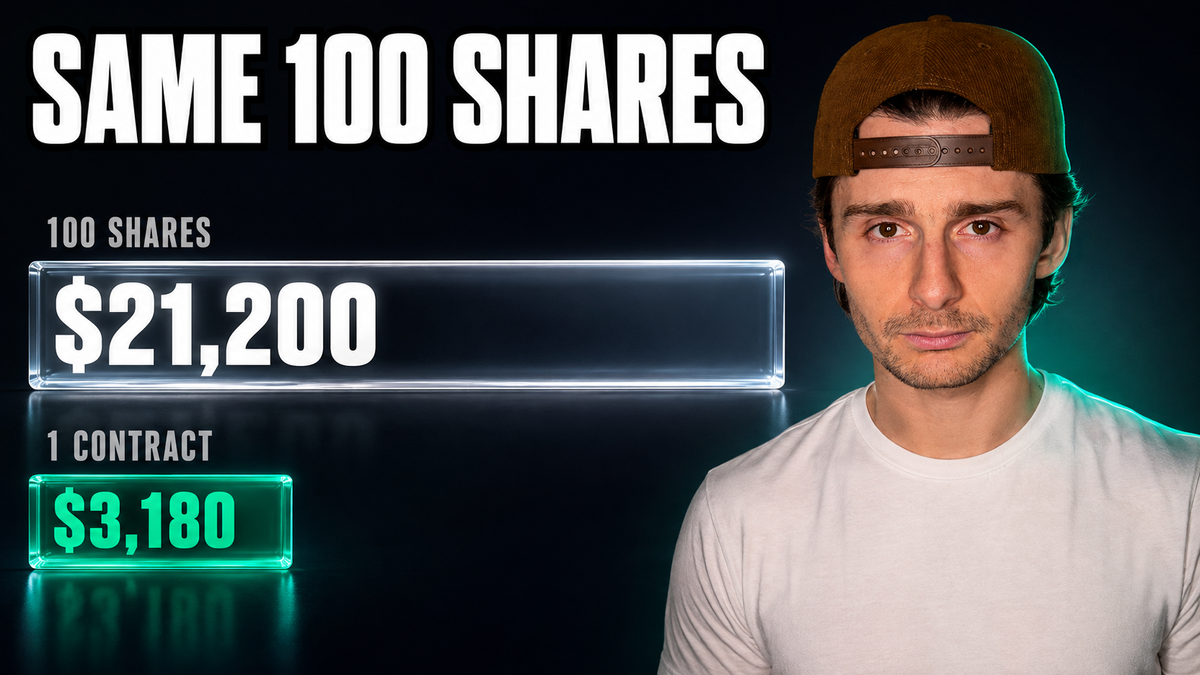
Here is the part that should get your attention. Holding 100 shares of Nvidia overnight in a margin account means putting up about half the position value. Holding one Nvidia futures contract overnight means putting up about 15%. Same exposure, a fraction of the capital.
There are no Greeks, no theta decay, and no borrow fee if you want to go short. On paper it looks close to perfect.
But two things almost nobody is covering: single stock futures do not get the 60/40 futures tax split, and the wash sale rule still applies. Let's run the actual math, look at the real margin requirements, and go through exactly what you are signing up for.
Table of Contents
- What Are Single Stock Futures?
- The New CME Single Stock Futures List
- The Margin Math: Why 15% Changes Everything
- The Risk Nobody Budgets For
- The Tax Trap: These Are Not Section 1256 Contracts
- Single Stock Futures vs. Index Futures
- Where to Trade Single Stock Futures Right Now
- Who Should Actually Use These?
- Frequently Asked Questions
- The Bottom Line
Key Takeaways
- The CME listed 55 single stock futures on July 27, plus a micro list covering about 22 of the largest, most liquid names.
- One standard contract equals roughly 100 shares of the underlying stock. One micro contract equals roughly 10 shares.
- Margin is about 15% of notional value. Nvidia's standard contract carries a $3,303 maintenance requirement versus $21,900 to buy 100 shares outright.
- That 15% is a floor set by the SEC and CFTC on both initial and maintenance margin, so it is not a number that moves around by broker.
- No Greeks, no theta decay, no borrow fee to go short — the structural advantages over options and short selling are real.
- You do not get the 60/40 tax split. Section 1256 explicitly excludes securities futures contracts, so gains are treated as short-term.
- The wash sale rule applies. Index futures are written out of it. Single stock futures are not.
- Cash settlement does not exempt you — Congress closed that door back in 2000.
- These names move. A 5–15% overnight gap on an earnings report or headline can blow through a 15% margin buffer fast.
What Are Single Stock Futures?
A single stock future is a futures contract where the underlying asset is one individual stock rather than an index. Buy one standard contract and you control the equivalent of 100 shares. Buy one micro contract and you control the equivalent of 10 shares.
The appeal is straightforward: you get share-equivalent exposure while posting a fraction of the capital, and you sidestep several headaches that come with the alternatives.
Compared with options, single stock futures give you:
- No Greeks to manage — no delta, gamma, theta or vega tracking
- No time decay eating your position while you wait for a thesis to play out
- No strange expiration mechanics or strike selection to get right
Compared with short selling shares, they give you:
- No borrow fee and no locate hunt when you want short exposure
- Symmetrical treatment — going short is mechanically identical to going long
Contracts trade on a quarterly cycle. At launch, the front contract expires in September and the next one expires in December.
The New CME Single Stock Futures List
The lineup splits into two tiers, and the difference between them matters enormously for position sizing.
Standard Contracts (100x Multiplier)
There are 55 single stock futures with a 100x multiplier. The list runs from the household names most traders already follow to a batch of slower-moving stocks that historically would not have been worth the capital commitment — but with this much leverage attached, they become a lot more interesting.
The most notable addition is SpaceX. A recently public, already highly volatile stock is now tradeable with exceptional amounts of leverage. Read that sentence twice before you size a position.
Micro Contracts (10x Multiplier)
The micro list covers about 22 stocks at a 10x multiplier. These are the core large-caps — Apple, Amazon, AMD and the rest of the biggest, most liquid names on the market.
SpaceX appears on this list too. Whoever built the product understood exactly where retail traders are looking, and it is hard to argue with the logic.
If you want to verify any of this yourself, search "single stock futures" on the CME Group site. Every contract has its own page with quotes, settlements, volume, open interest, contract specs, margins and the expiration calendar.
The Margin Math: Why 15% Changes Everything
This is the actual meat of the story. The margin requirement is what makes single stock futures a genuinely different instrument rather than a repackaged one.
The Nvidia Example, Side by Side
Pull up the micro Nvidia contract on CME Group and the quote page shows a last price of $219.93 — which you can cross-check on TradingView in a couple of seconds and confirm is right where you would expect.
Now compare what it costs to control 100 shares of Nvidia at roughly $219 per share:
| Method | Capital required | Approximate leverage |
|---|---|---|
| Buy 100 shares outright | $21,900 | 1x |
| Margin account, held overnight | ~$11,000 | 2x |
| Margin account, day trade only | ~$5,500 | 4x |
| One standard futures contract | $3,303 maintenance | ~6.6x |
And on the micro scale, controlling 10 shares of Nvidia:
| Method | Capital required |
|---|---|
| Buy 10 shares outright | $2,190 |
| One micro futures contract | $331 maintenance |
That $331 figure is the maintenance margin requirement — the amount you need to have in your account and keep in your account to hold a micro Nvidia position. The standard contract requirement is almost exactly ten times that, at $3,303, which lines up perfectly with the 10x versus 100x multiplier difference.
The comparison that matters most is the overnight one. A margin account gives you 2x leverage to hold overnight, so a 100-share Nvidia swing trade ties up about $11,000. The futures contract gives you the same exposure for $3,303. That is the whole pitch in one line.
The Rule-of-Thumb Margin Formula
You do not need to look up every contract individually. The math is consistent across the product line.
For a standard single stock futures contract:
- Take the current stock price
- Multiply by 100 (one contract equals roughly 100 shares)
- Multiply that result by 0.15 (15%)
Nvidia at $219 → $21,900 notional → $3,285, which lands right on the published $3,303 maintenance requirement.
For a micro single stock futures contract:
- Take the current stock price
- Multiply by 10 (one micro contract equals roughly 10 shares)
- Multiply that result by 0.15 (15%)
Nvidia at $219 → $2,190 notional → $328.50, right on the published $331 requirement.
That is close enough to plan around before you ever open the contract specs page.
Where the 15% Floor Comes From
The 15% is not a CME marketing number or a broker-specific setting. It is a regulatory floor set by the SEC and the CFTC that applies to both initial margin and maintenance margin.
That matters for two reasons:
- It is not going anywhere in the near term, so you can build a position-sizing framework around it
- It will not vary meaningfully by broker, unlike the wildly different day-trading buying power rules you see across equity platforms
The practical rule: if you plan to hold overnight, make sure you can comfortably cover 15% of the cost to own 10 shares (micro contracts) or 15% of the cost to own 100 shares (standard contracts) — with room to spare.
The Risk Nobody Budgets For
Here is where the leverage cuts the other direction. Stocks like Nvidia, AMD and SpaceX can move 5%, 10%, even 15% in a single session on earnings, guidance changes or a headline that has nothing to do with the company itself.
AMD moved 15% in a day recently — and it was not even off its own earnings report. It was a combination of outside news, its own news flow and broader market conditions.
Now put that next to a 15% margin requirement. A single adverse gap can consume your entire maintenance buffer before you have a chance to react.
The discipline this demands:
- Buffer well above the minimum. The maintenance requirement is the point at which you get a call, not a comfortable operating level.
- Size around your stop, not around your buying power. Just because you can hold six contracts does not mean the position survives a normal bad day.
- Know your earnings calendar. Overnight exposure into a scheduled catalyst on a leveraged single-name position is a different trade entirely.
- Plan for the gap, not the drawdown. Stops do not protect you through an overnight move — the market reopens where it reopens.
You need enough capital in the account to still meet maintenance requirements if price moves substantially against your position. That is the entire risk framework in one sentence.
The Tax Trap: These Are Not Section 1256 Contracts
If you have traded futures before, you know the deal. 60% of your gains are taxed at the long-term capital gains rate and 40% at the short-term rate, regardless of how long you actually held the trade. No wash sale rule. A three-year loss carryback. It is arguably the best tax treatment available in retail trading.
None of that applies here.
The CME states it plainly: these are security futures products, jointly regulated by the SEC and the CFTC. Trading ES or NQ puts you under CFTC regulation only. Different regulator, different bucket — and the tax code cares about the bucket.
Section 1256 is where the 60/40 split lives, and the statute says the term "Section 1256 contract" shall not include any securities futures contract. That single exclusion is what changes everything about how these trades hit your return.
What You Actually Get
Instead of 60/40 treatment, single stock futures give you:
- Short-term capital gains on your profits
- No year-end mark-to-market accounting
- No three-year loss carryback
- The wash sale rule, fully in effect
The Wash Sale Rule Still Applies
This deserves to be stated as clearly as possible: index futures are written out of the wash sale rule. Single stock futures are not.
Two scenarios that will catch people off guard:
- You sell Nvidia shares at a loss and buy Nvidia shares back inside a 30-day window → that loss is disallowed
- You short an Nvidia future, close it at a loss, then re-enter inside the next 30 days → same result, that loss is disallowed
For an active trader cycling in and out of the same name, this is not a fringe edge case. It is the default behavior of the strategy.
Cash Settlement Does Not Save You
The obvious objection is that these contracts are cash settled, so surely the wash sale rule cannot reach them.
Congress handled that in 2000 with language stating that the section "shall not fail to apply solely because the contract settles in cash." That door was closed more than twenty years ago.
A necessary disclaimer: none of this is tax advice, and TC Trading is not a tax professional. If any of this affects your situation, talk to a qualified professional who can walk you through the proper steps — ideally before tax season rather than during it.
Single Stock Futures vs. Index Futures
The cleanest way to understand what you are giving up is a direct comparison with the index futures most traders already know.
| Factor | Index futures (ES, NQ) | Single stock futures |
|---|---|---|
| Regulator | CFTC only | SEC and CFTC jointly |
| Section 1256 status | Qualifies | Explicitly excluded |
| Tax split | 60% long-term / 40% short-term | Short-term capital gains |
| Year-end mark-to-market | Yes | No |
| Three-year loss carryback | Yes | No |
| Wash sale rule | Written out of it | Fully applies |
The leverage and the mechanics are attractive. The tax bucket is strictly worse. Both of those things are true at the same time, and you should be pricing the second one into your expectations before you place the trade.
Where to Trade Single Stock Futures Right Now
Availability is still limited. As of now, CME is advertising Schwab, NinjaTrader and Plus500, with a link on their site to additional brokers and clearing firms.
Notably absent from that list: Robinhood, Webull and Interactive Brokers. That will almost certainly change in the near future given how quickly retail demand tends to pull brokers into a new product, but if you are on one of those platforms today, you cannot access these contracts yet.
Before you commit to a platform, check the CME contract page for the specific name you want to trade and confirm volume and open interest are healthy. A leverage product with thin liquidity is a very different risk profile than the same product with deep two-sided markets.
Who Should Actually Use These?
The biggest takeaway is that you now get substantially more leverage than the 2x overnight or 4x intraday you would get putting up cash in a margin account — and you get it without the Greeks, without time decay, and without odd option expirations to navigate.
That is a genuinely useful tool for a trader who already has a defined edge and a tested process.
It is a genuinely dangerous tool for everyone else. At the end of the day this is still trading and it is still speculative. More leverage does not fix a strategy that does not work. It just makes the outcome arrive faster.
If you want to build the risk management side before you touch this much leverage, TradeZella is worth a look. You can track your full trading record, review your mistakes systematically, use AI to identify what to fix, and run full backtests by describing your strategy in plain language. Knowing your actual numbers — win rate, average loss, worst drawdown — is what tells you whether you have any business trading at 6x exposure.
Frequently Asked Questions
What are single stock futures?
Single stock futures are futures contracts on an individual stock rather than an index. One standard contract controls the equivalent of 100 shares; one micro contract controls the equivalent of 10 shares. The CME listed 55 standard contracts and roughly 22 micro contracts on July 27.
How much margin do I need for a single stock futures contract?
About 15% of the notional value. For a standard contract, multiply the stock price by 100, then by 0.15. For a micro contract, multiply the stock price by 10, then by 0.15. Nvidia at roughly $219 works out to a $3,303 maintenance requirement on the standard contract and $331 on the micro.
Do single stock futures get the 60/40 tax treatment?
No. Section 1256 explicitly excludes securities futures contracts, so the 60/40 split does not apply. Gains are treated as short-term capital gains, with no year-end mark-to-market and no three-year loss carryback.
Does the wash sale rule apply to single stock futures?
Yes. Index futures are written out of the wash sale rule, but single stock futures are not. Closing a position at a loss and re-entering the same name within 30 days will disallow that loss.
Do cash-settled contracts avoid the wash sale rule?
No. Congress addressed this in 2000 with language confirming the section applies even when the contract settles in cash.
How much leverage do single stock futures give me?
At a 15% margin requirement, roughly 6.6x on notional value. Compare that to 2x overnight and up to 4x intraday in a standard equity margin account.
Which brokers offer single stock futures?
CME currently advertises Schwab, NinjaTrader and Plus500, and links to additional brokers and clearing firms on its site. Robinhood, Webull and Interactive Brokers are not on the list yet.
Can I trade SpaceX with single stock futures?
Yes. SpaceX appears on both the standard 55-name list and the micro list. It is also an already-volatile recent IPO, so it demands more conservative sizing than the name's novelty might suggest.
Do single stock futures have time decay or Greeks?
No. That is one of the main structural advantages over options — there is no theta working against you and no Greeks to manage.
Is there a borrow fee to short single stock futures?
No. Going short is mechanically identical to going long, with no borrow cost and no locate required.
The Bottom Line
Single stock futures are a real upgrade in capital efficiency. Roughly 6.6x exposure on a 15% margin requirement, no Greeks, no theta decay, no borrow fee to go short, and a clean regulatory floor that will not shift by broker. For a trader with a defined process, that is a meaningful tool.
But the two things nobody is talking about are the two things that will actually cost you money. You do not get the 60/40 tax split — Section 1256 explicitly excludes these contracts. And the wash sale rule applies in full, cash settlement or not.
Run the margin formula before you size a position. Buffer well above the maintenance requirement, because these names gap 5–15% on news more often than you think. And have a conversation with a tax professional before this becomes a filing problem rather than a planning one.
If you are going to trade with this much leverage, know your numbers first. Track every trade, review what is actually working, and stress-test your strategy before you scale it — set up your trading journal in TradeZella and get an honest read on your edge before the leverage tells you the hard way.
Watch the full video here: